Cross-Ecosystem Reward Chains in Sportsbooks and Casinos During 2026
Casey Brooks · Jul 1, 2026
Cross-Ecosystem Reward Chains in Sportsbooks and Casinos During 2026
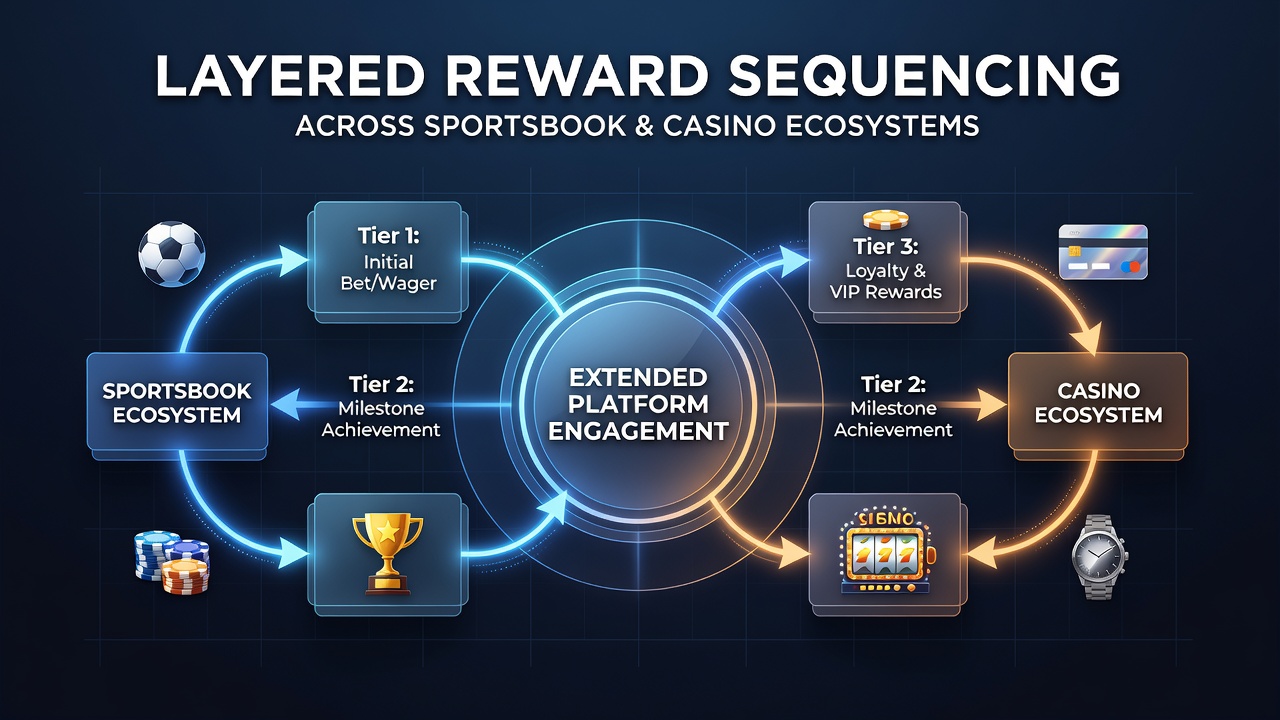
Operators have developed structured approaches to reward sequencing that link casino features with sportsbook elements, and these methods aim to extend user activity across both sections of integrated platforms. Reports from July 2026 indicate that several major operators adjusted their bonus timelines to create smoother transitions between game types, allowing participants to move from one incentive to the next without losing momentum.
Defining Reward Sequencing Structures
Layered reward sequencing involves the deliberate ordering of promotions so that completion of one set of requirements unlocks access to another category of offers. Casino operators often begin with deposit-matched credits or free spin allocations, then route eligible users toward sportsbook enhancements such as boosted odds on selected events or cashback on accumulated stakes. Data compiled by the Canadian Gaming Association shows that platforms employing these sequences recorded average session extensions of 18 percent compared with single-category promotions during the first half of 2026.
Timing plays a central role because each layer carries its own validity window. A typical sequence starts with a casino welcome package that must be used within seven days, after which an automated trigger activates a sportsbook odds boost valid for the following weekend's fixtures. Industry analysts note that this staggered release reduces the chance of users abandoning the platform between bonus periods.
Implementation Patterns Observed in Mid-2026
Platform operators have refined their systems to monitor user progress across verticals in real time. When a participant finishes the casino portion of a sequence, the sportsbook module automatically populates with personalized suggestions that align with the remaining reward balance. Figures released by the European Gaming and Betting Association reveal that synchronized sequencing produced a 22 percent increase in cross-vertical activity among accounts active between January and June 2026.
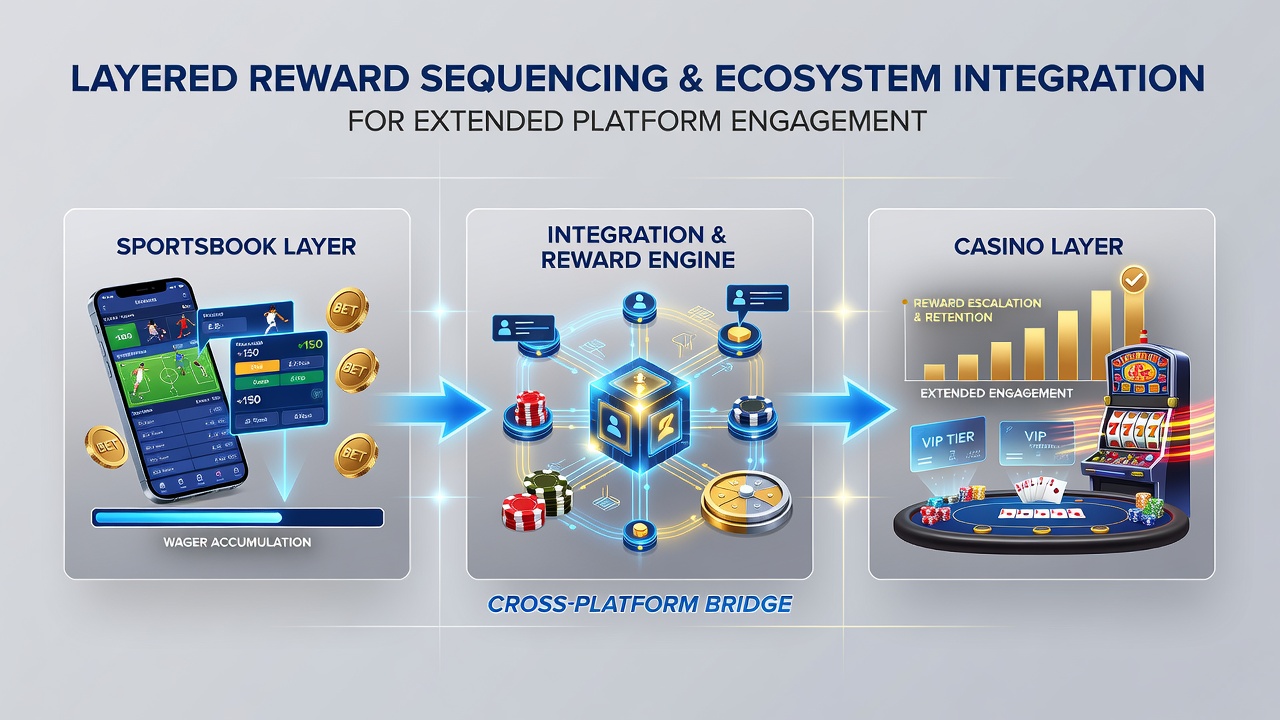
One documented pattern pairs slot tournaments with accumulator bonuses. Users who reach a threshold in the tournament receive an automatic odds multiplier for multi-leg bets placed within 48 hours. Another pattern routes table game cashback directly into a free bet token that expires after a major sporting event. These pairings rely on backend rules that prevent overlap while maintaining continuous incentive flow.
Technical Requirements for Effective Sequencing
Successful implementation depends on unified account ledgers that track both casino and sportsbook balances under a single profile. Developers integrate API connections between the two modules so that qualifying transactions update reward status instantly. According to research published by the University of Nevada's International Gaming Institute, platforms that maintained separate ledgers experienced 31 percent higher rates of unclaimed rewards because users lost visibility into their progress.
Regulatory frameworks in several jurisdictions require clear disclosure of sequencing rules before users opt in. Operators therefore present visual timelines at the point of bonus activation, showing each stage, its conditions, and the next available layer. This transparency helps maintain compliance while supporting extended engagement metrics tracked through July 2026.
Measurement of Extended Platform Activity
Operators evaluate sequencing performance through metrics such as time between sessions, vertical switching frequency, and total active days per month. A study covering platforms in Australia and New Zealand found that sequenced rewards correlated with a 15 percent rise in monthly active days when compared with standalone promotions. The same report noted that sequences spanning more than three layers produced diminishing returns beyond the fourth stage, prompting operators to cap most programs at three connected offers.
July 2026 data releases from regional monitoring bodies further indicated that users who completed at least two layers of a sequence showed higher retention into the subsequent quarter. These patterns hold across multiple operator groups, suggesting that the structure itself, rather than any single promotion type, drives the observed continuity.
Conclusion
Layered reward sequencing across sportsbook and casino ecosystems has become a documented operational practice by mid-2026. The approach relies on ordered incentives, unified tracking systems, and precise timing to encourage movement between platform sections. Available figures from industry associations and academic sources confirm measurable increases in session length and cross-vertical activity when sequences follow consistent rules. Operators continue to refine these structures based on performance data collected through the summer of 2026.